Ready for Life: My Insights into Essential Life Skills:
In a world that’s constantly evolving, where technology, education, and societal pressures shape our daily lives, one can’t help but marvel at the innate abilities of today’s young children. As I observe kids in nursery, first, second, or third grade, it strikes me that they seem like natural-born MBAs—masters of business administration in their own playful, innocent way. But what does this really mean for their development? Is this precocious organization a blessing or a potential pitfall? And could there be a deeper, almost cosmic force at play, connecting all living beings to a universal repository of knowledge? Let’s dive into these thoughts and explore the fascinating world of life skills through the lens of our youngest generation.
The Innate MBA in Every Child
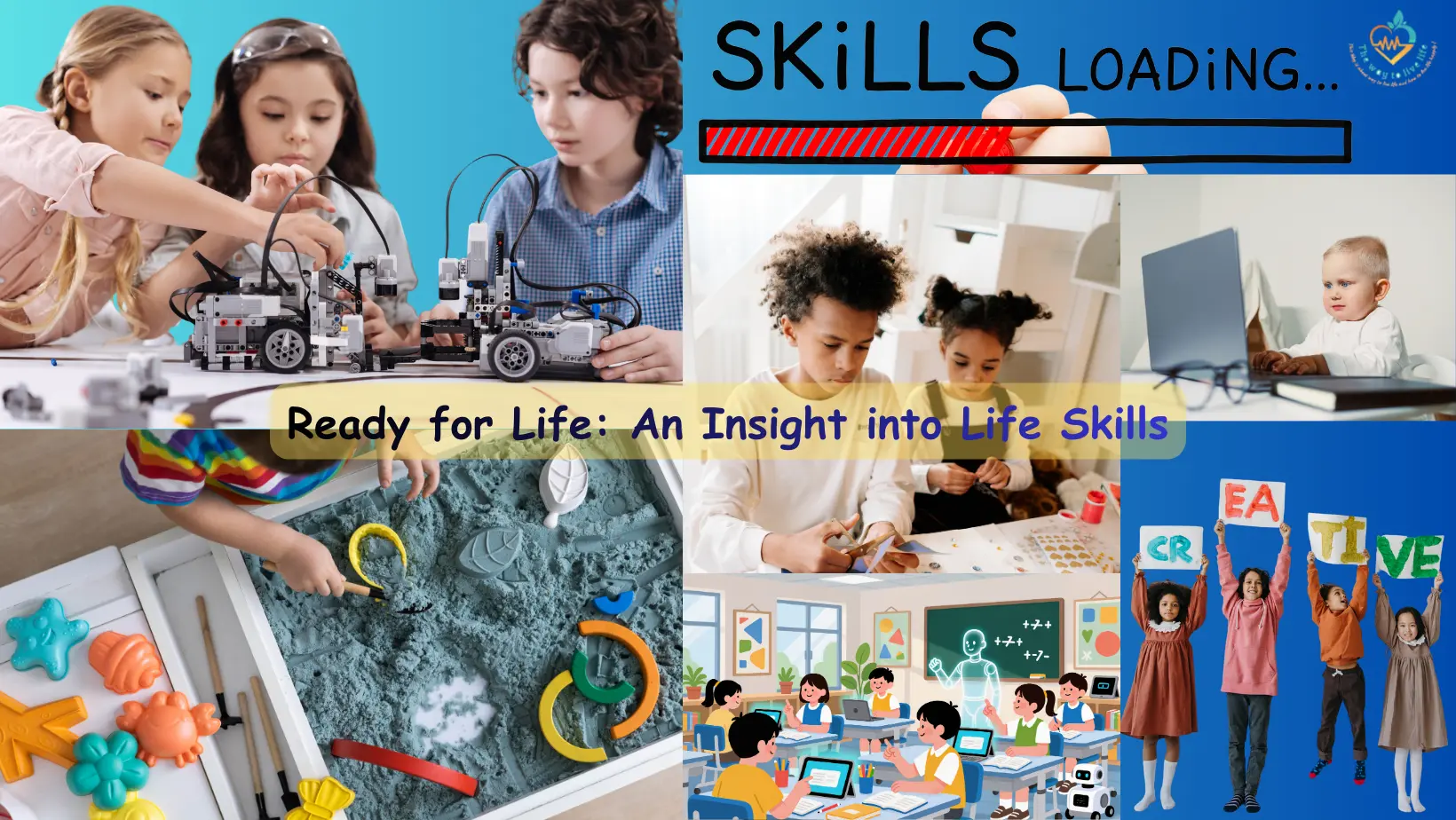
Picture this: A group of toddlers building a tower with blocks. It’s not just random stacking; there’s strategy involved. One child delegates roles—”You get the red blocks, I’ll handle the base”—while another negotiates for more resources, trading a toy car for extra pieces. In mere minutes, they’ve created a structured masterpiece, complete with problem-solving when the tower wobbles. This isn’t scripted; it’s instinctive.
From my interactions with children, I’ve noticed this pattern repeatedly. Whether it’s organizing a pretend tea party with assigned seats and a “menu” of imaginary treats, or coordinating a game of tag with rules that evolve on the fly to ensure fairness, kids today exhibit an uncanny level of systematic thinking. They prioritize tasks, manage “resources” (like toys or snacks), and even resolve conflicts with a diplomacy that would make corporate negotiators envious.
What fuels this? Perhaps it’s the digital age. Exposed to apps, videos, and interactive games from infancy, these children absorb patterns of efficiency and logic early on. Educational shows teach sequencing and categorization, while social media glimpses into adult worlds subtly influence their play. But is this just environmental, or is there something more profound at work?
The Double-Edged Sword: Is This Precocity Good or Bad?
Here’s where things get tricky. On one hand, this built-in organizational prowess equips children for a competitive future. Life skills like time management, teamwork, and adaptability are crucial in adulthood—think job interviews, project deadlines, or even balancing family life. If kids are honing these naturally through play, they’re essentially “ready for life” from the get-go. It fosters resilience; a child who learns to pivot during a game is better prepared for real-world setbacks.
Yet, I can’t shake the concern: Is this too much, too soon? Childhood should be a time of unbridled creativity and exploration, not mini-corporate simulations. Over-structuring play might stifle imagination—where’s the room for whimsy if every activity mimics a boardroom meeting? There’s also the risk of burnout; if kids are already thinking like executives, what happens when they hit actual school pressures? We might be robbing them of the joy of simply “being,” replacing it with an early onset of productivity culture.
Psychologists often debate this. Studies suggest that structured play enhances cognitive development, but unstructured free play is vital for emotional growth and creativity. Striking a balance is key. As parents and educators, we should encourage this natural talent without imposing adult expectations. Let them lead their games, but also provide spaces for pure, chaotic fun.
The Cosmic Connection: A Supreme Knowledge Center
Amidst this puzzle, one idea stands firm: There must be a divine or supreme power orchestrating a grand “knowledge center” somewhere in the universe. Imagine it as nature’s ultimate cloud storage—a repository where every experience, insight, and instinct from all living beings is uploaded, stored, and redistributed. From the ant colony’s efficient foraging to the bird’s migratory precision, and now to our children’s intuitive strategies, everything is interconnected.
This isn’t just philosophical musing; it echoes ancient wisdom and modern science. Concepts like Carl Jung’s collective unconscious or Rupert Sheldrake’s morphic fields suggest that knowledge isn’t isolated but shared across species and generations. Perhaps children tap into this more readily because their minds are unclouded by cynicism or overthinking. Nature ensures survival by distributing these life skills universally—making sure every creature, human or otherwise, is equipped to thrive.
In essence, our kids’ MBA-like traits might be evolutionary gifts from this cosmic network, preparing them for life’s complexities. It’s a reminder that we’re all part of something bigger, where learning isn’t confined to classrooms but flows through the very fabric of existence.
Wrapping Up: Embracing the Ready-for-Life Mindset
As we reflect on these observations, it’s clear that today’s children are harbingers of a more adaptive, skilled generation. Whether their organized play is a product of environment, genetics, or a higher power, the key is nurturing it wisely. Encourage the structure, but preserve the sparkle of childhood wonder. After all, true life skills aren’t just about efficiency—they’re about joy, empathy, and connection.
What do you think? Have you noticed similar traits in the kids around you? Share your stories in the comments below. Let’s celebrate these little life-ready wonders and learn a thing or two from them along the way.
*Note: This post is inspired by personal reflections on child development and the mysteries of innate knowledge.